
CONGENITAL HEART SURGERY

Congenital Heart Defect Surgery in Kabul

Dr. Arman Khan provides surgical evaluation in Kabul for congenital heart defects that may require repair or corrective heart surgery. Treatment depends on the type of heart defect, its severity, heart anatomy and the patient’s individual condition.
Congenital Heart Surgery in Kabul, Afghanistan

Individual evaluation based on heart anatomy, circulation, severity and overall condition

What Is Congenital Heart Defect Surgery?

Congenital heart defect surgery is used to repair structural heart problems that are present from birth. Some defects only need monitoring, while more significant problems may require a catheter procedure or surgery to improve blood flow and heart function. The exact treatment depends on the type and severity of the defect.

When Is Congenital Heart Surgery Considered?

Surgery may be considered when a congenital heart defect significantly affects blood flow, heart function or the patient’s overall health. The decision depends on factors such as:
Not every congenital heart defect requires surgery. Treatment is based on the individual defect and its severity.

Congenital Heart Defects That May Need Surgery

Different congenital heart defects require different treatment approaches. Surgery may be considered when the defect significantly affects blood flow or heart function.

Atrial Septal Defect (ASD)

ASD is an opening between the upper chambers of the heart. Larger or clinically significant defects may require closure.

Ventricular Septal Defect (VSD)

VSD is an opening between the lower chambers of the heart. Treatment depends on the size of the defect and its effect on circulation and heart function.

Tetralogy of Fallot

Tetralogy of Fallot is a complex congenital heart condition that usually requires surgical repair to improve blood flow to the lungs.

Coarctation of the Aorta

Coarctation is a narrowing of the aorta that can restrict blood flow to the body. Severe cases, especially in infants, may require surgical repair. Other defects may also require surgery depending on anatomy, severity and circulation.

How Congenital Heart Surgery Is Planned

Planning depends on the exact heart defect, its effect on circulation and the patient’s overall condition. The assessment may include:
These findings help determine whether surgery is needed, when it should be performed and which surgical approach is appropriate.

Congenital Heart Surgery in Kabul With Dr. Arman Khan

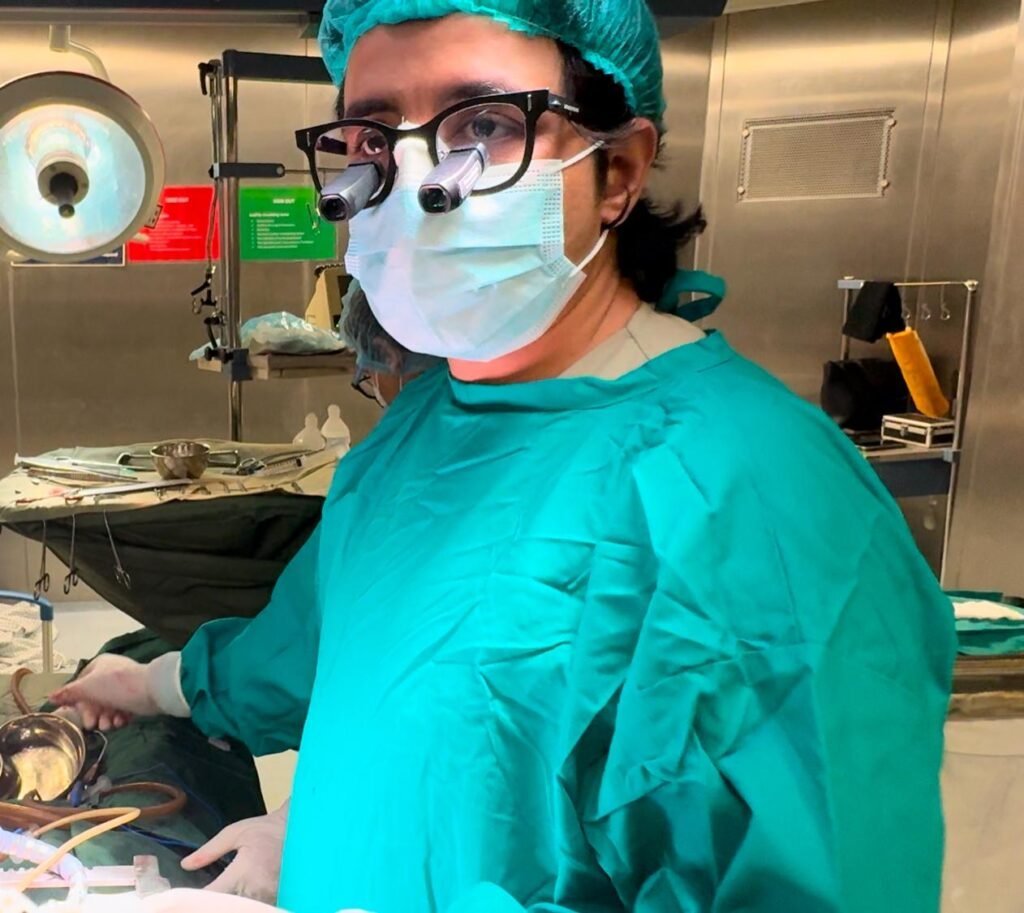
Dr. Arman Khan is a Consultant Cardiac Surgeon with an MS in Cardiac Surgery and Fellowship training in Pediatric Cardiac Surgery. He evaluates patients with congenital heart defects to determine whether surgical treatment is required and which approach is appropriate for the specific heart anatomy and condition.

Frequently Asked Questions

No. Some defects only need monitoring, while others may require catheter treatment or surgery depending on the type and severity of the condition.

Evaluation may include echocardiography, ECG, chest imaging, cardiac MRI or catheterization depending on the defect and the information needed for treatment planning.

Yes. Larger or clinically significant septal defects may require closure when they affect blood flow, heart function or create other concerns. Smaller defects may only need monitoring.

Yes. Tetralogy of Fallot is generally treated with surgical repair, although some babies may require a temporary procedure before complete repair.

Some defects can be treated using catheter-based procedures. The best approach depends on the specific heart defect and anatomy.

The timing varies. Some serious defects require treatment soon after birth, while others can be repaired later depending on symptoms, anatomy and severity.

Yes. Some complex congenital heart defects require staged procedures or more than one operation over time.

Yes. Ongoing cardiology follow-up is important because some patients need monitoring for heart function, rhythm problems or other long-term changes after treatment.

Congenital Heart Surgery Consultation in Kabul

Dr. Arman Khan provides surgical evaluation in Kabul for patients with congenital heart defects that may require corrective heart surgery.